

TWA Flight 800 and Swissair 111: Two Tragedies, One Disturbing Pattern
On July 17, 1996, just twelve minutes after takeoff from New York’s JFK Airport, Trans World Airlines Flight 800—a Boeing 747-100—exploded midair and plunged into the Atlantic Ocean near East Moriches, New York. All 230 people on board were lost. The cause, officially attributed to a fuel tank explosion, left many unanswered questions and ignited years of speculation.
Then, two years and 47 days later, on September 2, 1998, Swissair Flight 111 —a McDonnell Douglas MD-11—caught fire mid-flight and crashed into the Atlantic near Peggy’s Cove, Nova Scotia, killing all 229 aboard. Two catastrophic aviation disasters, two wide-body airliners, both originating from JFK, both departing on Wednesdays at exactly 8:19 p.m., and both flying a nearly identical departure route over the Atlantic.
Coincidence? Or a pattern too precise to ignore?
A Disturbing Hypothesis: Electromagnetic Interference
In a groundbreaking essay published in the September 21, 2000 issue of The New York Review of Books, Harvard professor Elaine Scarry raised a chilling possibility: both crashes may have been triggered by electromagnetic interference—or EMI—a powerful, high-intensity radio frequency (HIRF) event capable of disrupting an aircraft’s electronic systems mid-flight.
Scarry pointed out a stunning statistic: during the two years and 47 days between the two disasters, nearly 18 million flights took off in the U.S. Only two of those ended in what she called “mysterious electrical catastrophes”—and those two shared eerily identical parameters.
In the case of Swissair 111, the aircraft did not explode immediately. Trouble was first reported 55 minutes into the flight. But crucially, radio contact with air traffic control was disrupted for a 13-minute window, beginning just 14 minutes after takeoff—right around the same altitude and location where TWA 800 vanished from the sky.
The Overlooked Connection
If, as professor Scarry suggests, the radio silence in Swissair 111 was the first symptom of an electromagnetic event—perhaps a weapons test, signal spike, or unshielded military transmission—then both aircraft may have flown through the same invisible threat. The proximity in time, location, and flight path between the two crashes is more than unsettling—it’s a flashing red warning light in aviation history.
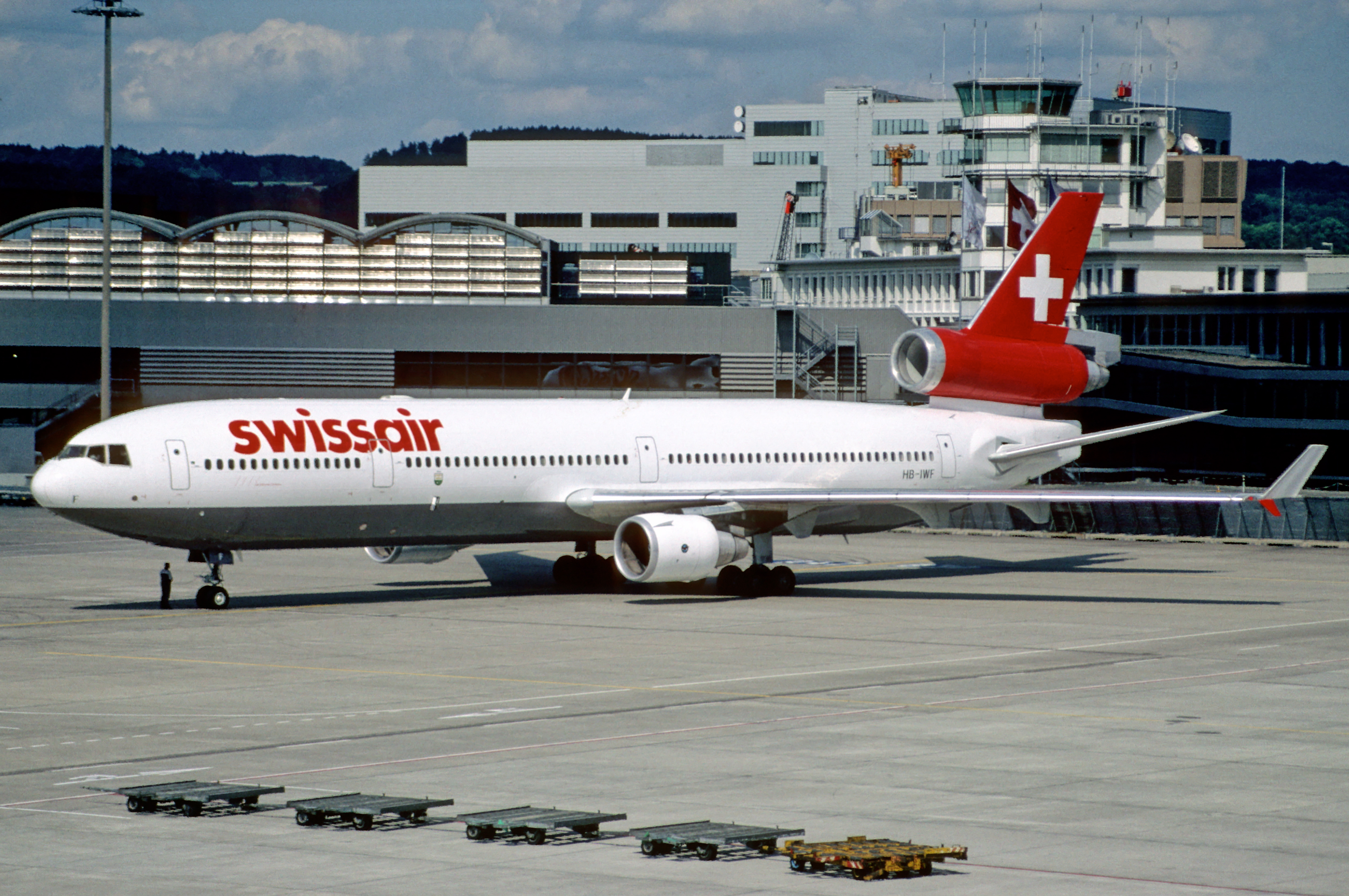
Both tragedies remain officially unconnected. Yet the possibility that electromagnetic interference played a hidden role—and that this factor was overlooked, ignored, or even quietly buried—raises serious questions about how vulnerable modern aircraft may still be.
Truth Buried at 30,000 Feet?
TWA 800 and Swissair 111 were two of the most devastating aviation losses of the 1990s. But beneath the smoke and wreckage lies something even more disturbing: the possibility of a shared cause, a pattern missed, or worse—a risk known and never addressed.
The skies are supposed to be safe. But what if there’s something up there—unseen, unchecked, and still unspoken?